
Articles
The latest articles from PRODCOBTM, newest first.
-
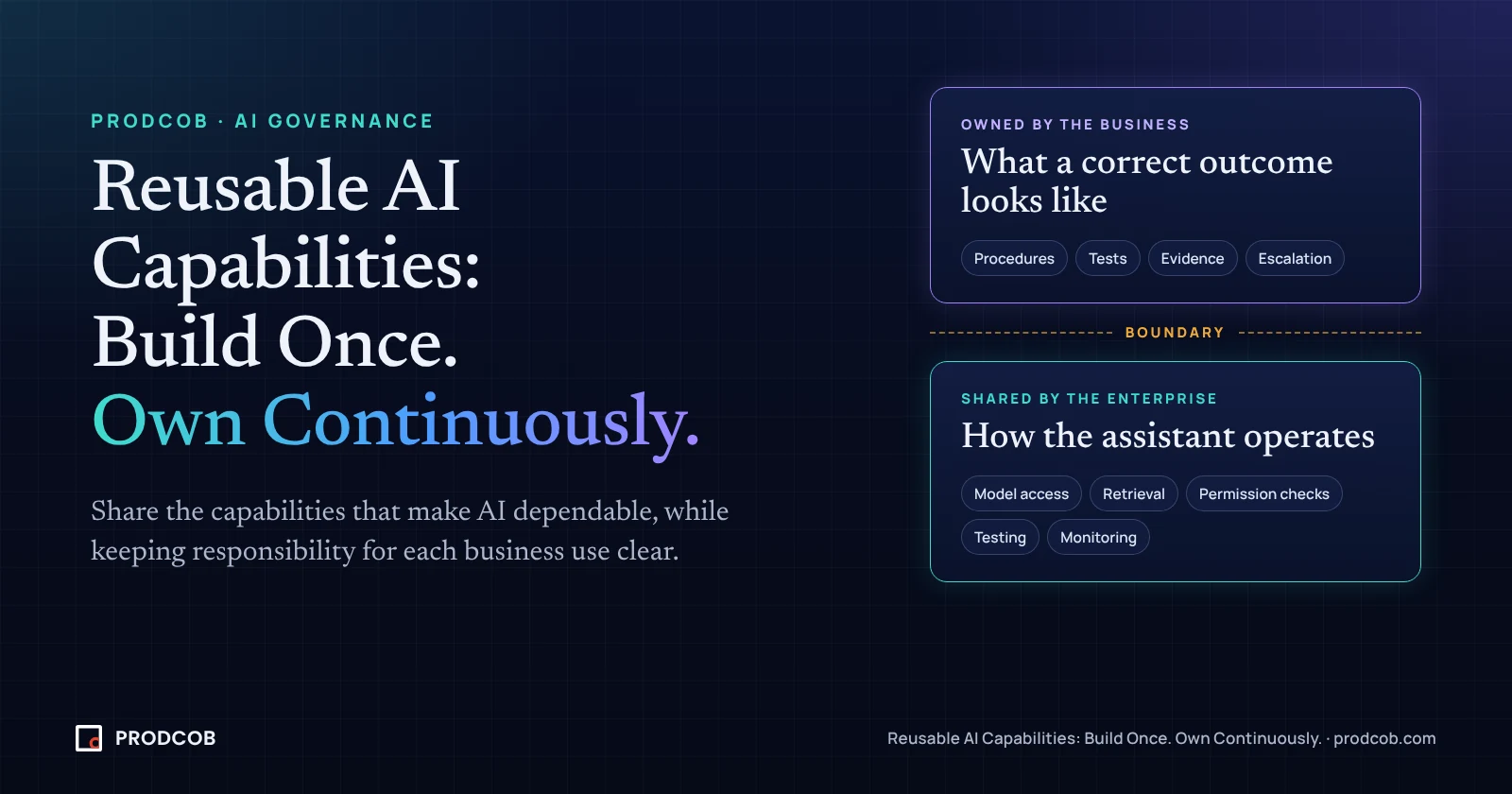
Reusable AI Capabilities: Build Once. Own Continuously.
Every new AI use case should not require the enterprise to rebuild model access, evaluation, controls and monitoring. Reuse becomes dependable when shared capabilities have explicit operating contracts and application teams retain responsibility for their business outcomes.
-
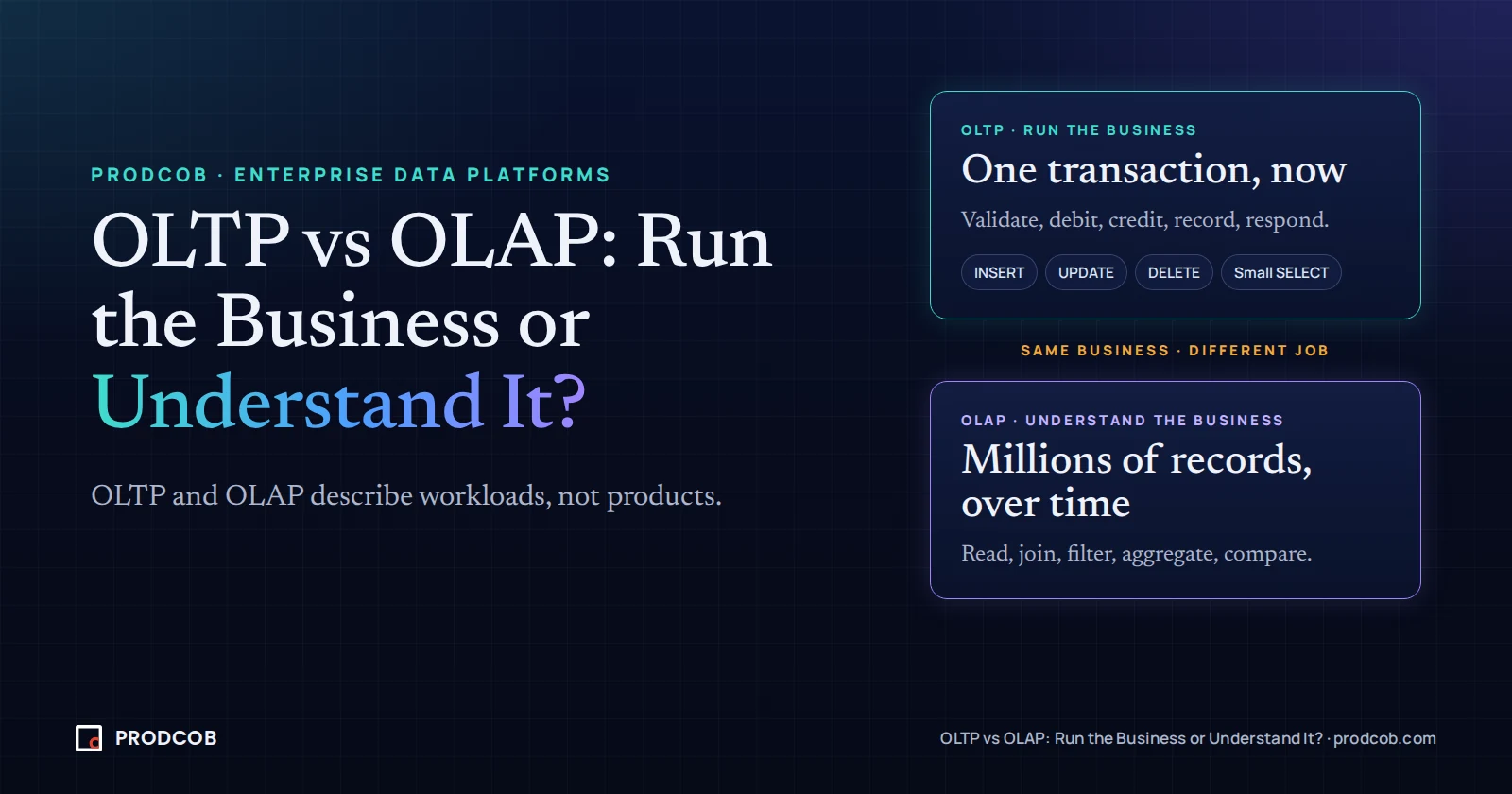
OLTP vs OLAP: Run the Business or Understand It?
OLTP and OLAP are often explained as database concepts. The more useful distinction is simpler: one helps run the business; the other helps understand it. This article explains why that difference shapes enterprise data architecture.
-
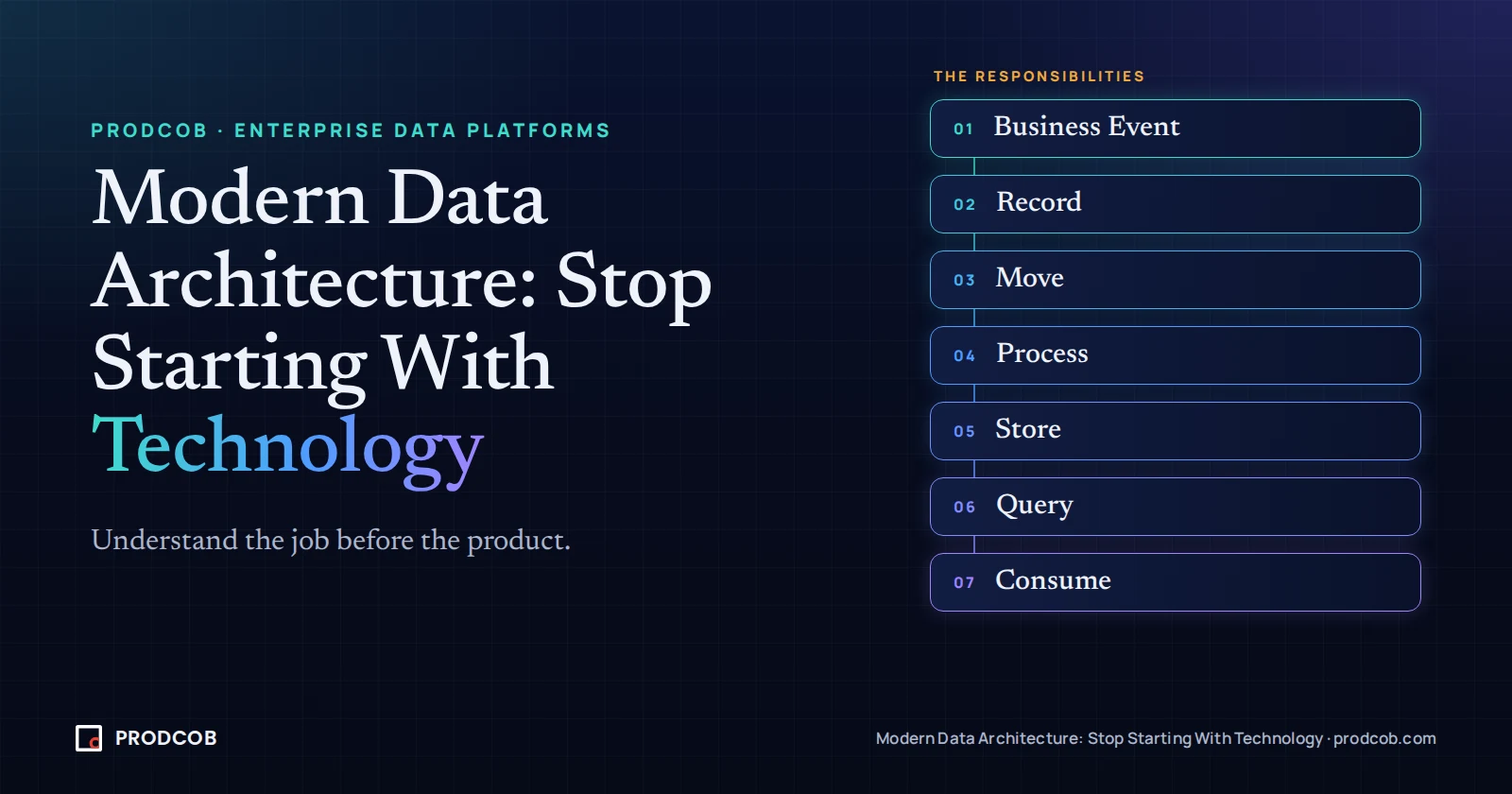
Modern Data Architecture: Stop Starting With Technology
A modern data architecture becomes much easier to understand when we stop starting with technology names. This article uses one simple model Move → Process → Store → Query → Consume to explain how operational data becomes something a business can actually use.
-
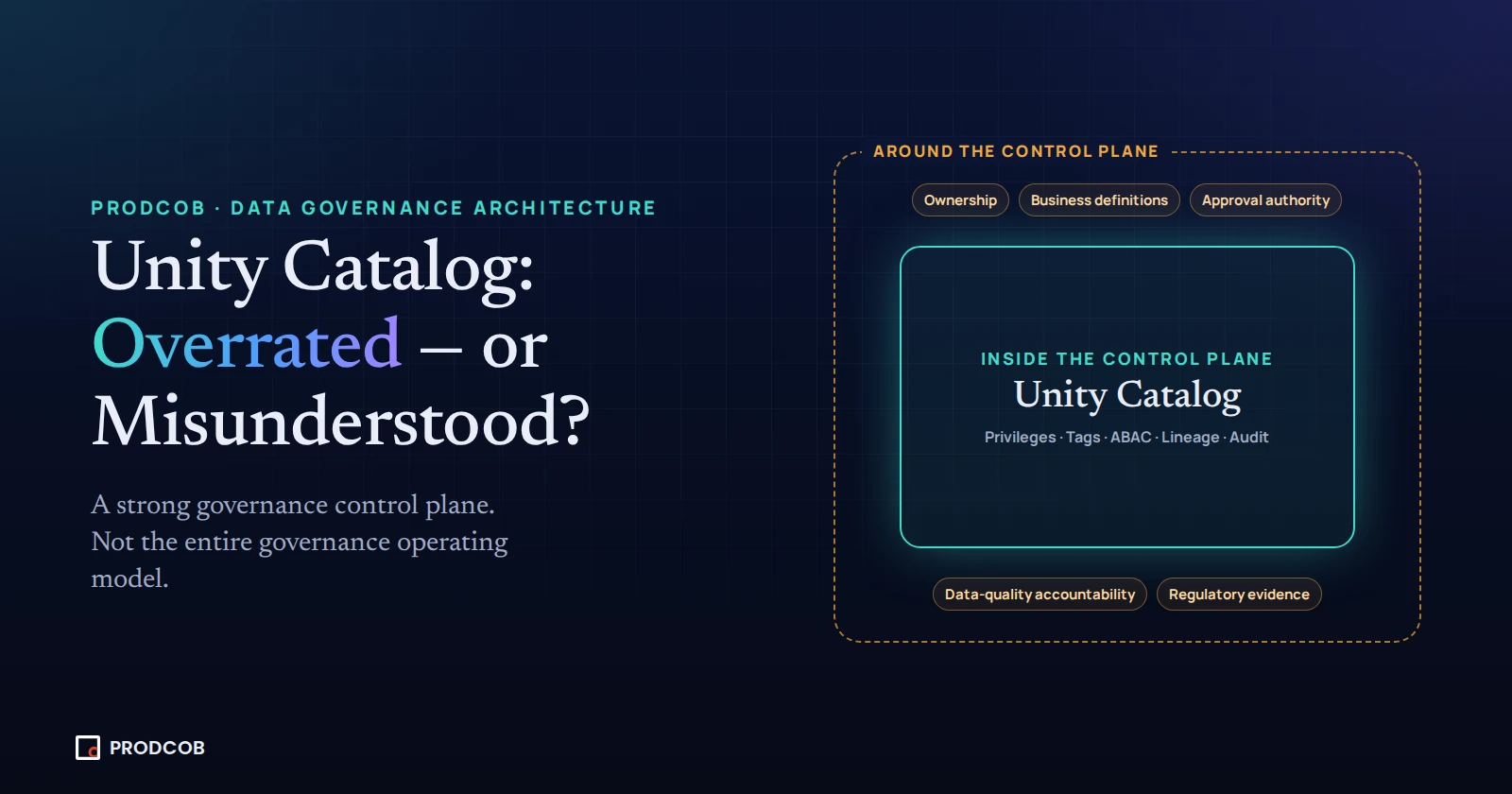
Unity Catalog: Overrated or Misunderstood?
Unity Catalog is a powerful governance control plane—but that does not make it the entire governance operating model. The more useful architecture question is what Unity Catalog should enforce, and what remains outside its control boundary.
-
Part 4 of 4: From Controlled Access to Visual Cloud Understanding: How I Applied the Pattern in APRIS AVA™ www.APRISAVA.com
APRIS AVA™ is the real-world application of this series’ identity and authorization patterns — how I connected it securely to Azure without exposing the underlying implementation.
-
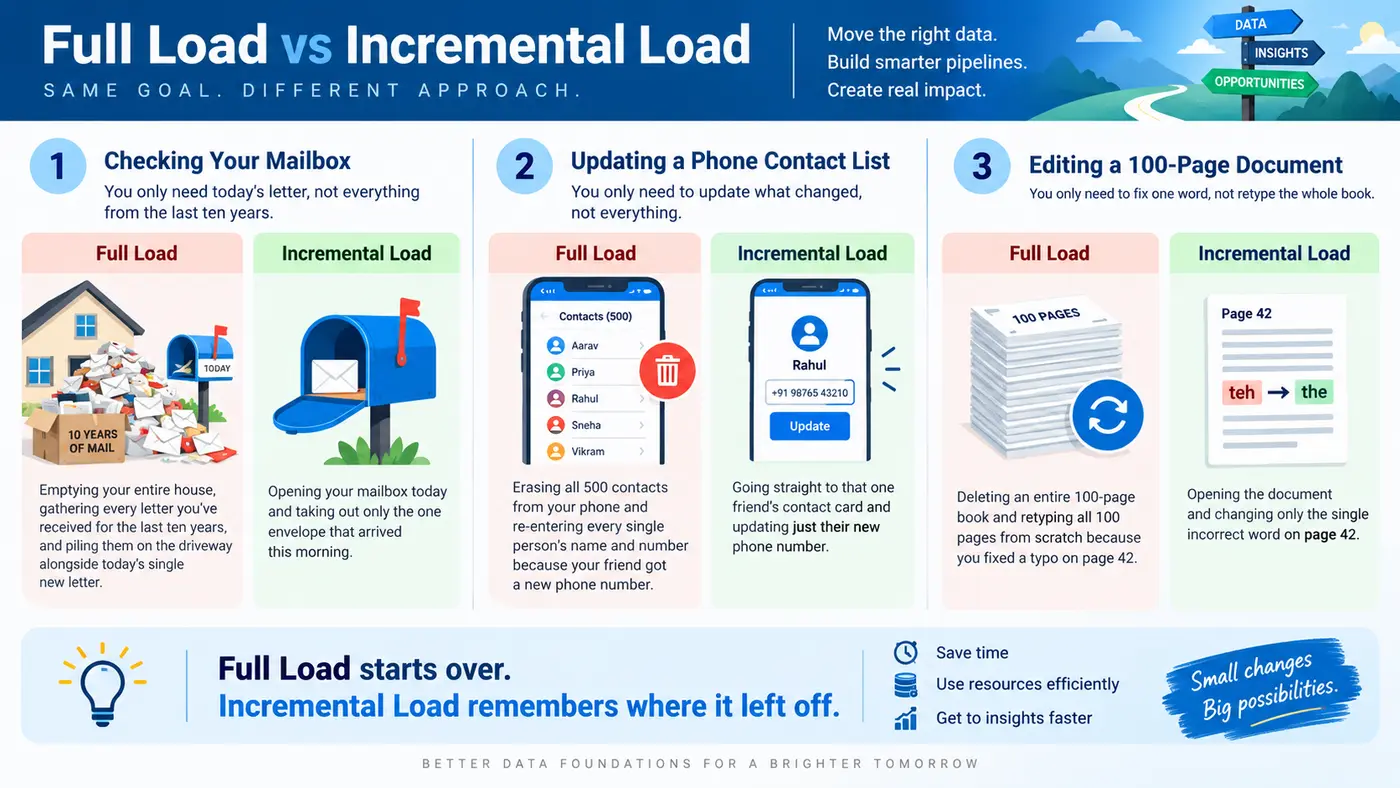
Full Load vs Incremental Load: Azure Data Factory + Azure Databricks Quick Study Guide
Full load starts over. Incremental load remembers where it left off. That memory makes incremental loading efficient – and creates the need for stronger controls.
-
Part 3 of 4: Identity Is Not Authorization: API Permissions, Access Tokens and Azure RBAC Explained
A valid identity should never be confused with unlimited authorization. API permissions, access tokens and Azure RBAC each add a distinct layer of control.
-
Part 2 of 4: Azure Subscription, Entra ID, Tenant and App Registration: What Does Each One Actually Do?
Azure Subscription, Entra ID, Tenant, App Registration and Client ID sound like overlapping terms. They are not. Each solves a distinct problem in the identity architecture.
-
Part 1 of 4: Why I Wouldn’t Build Microsoft Authentication Into My Web Application
Connecting a web app to Microsoft Azure starts with the wrong question. The right one separates identity, authorization, and product responsibility — and it changes the architecture.
-
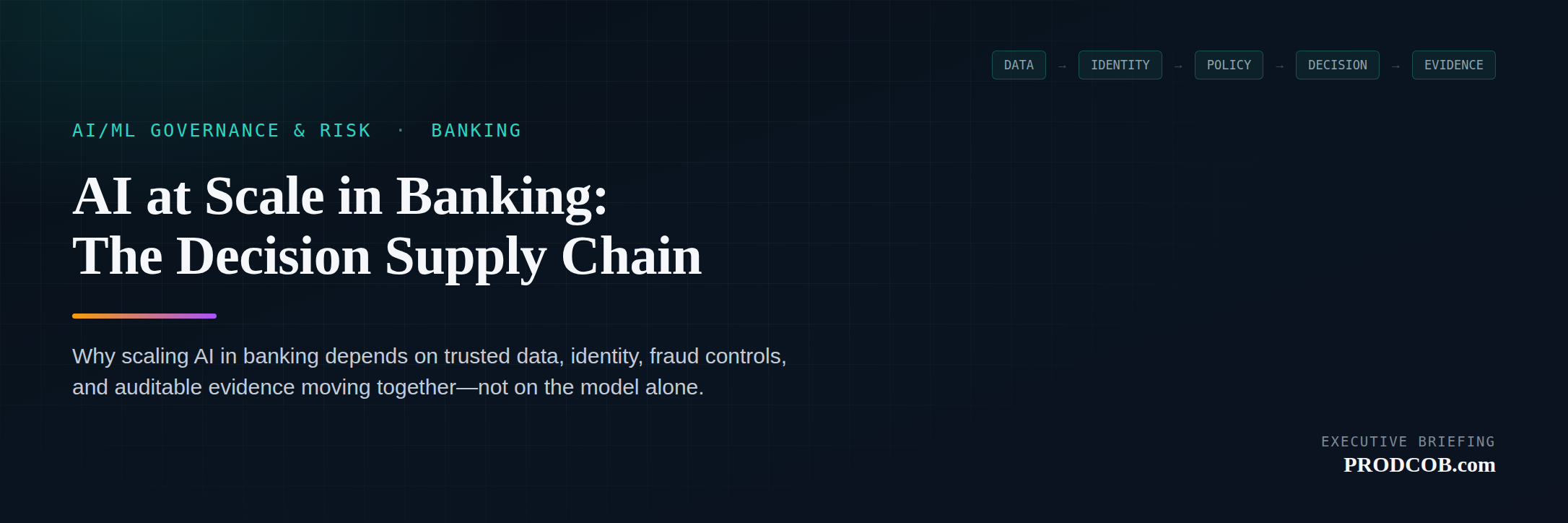
AI at Scale in Banking: The Decision Supply Chain
Banks are scaling AI at the same moment that fraud is becoming more sophisticated and payments are becoming faster. The real challenge is no longer deploying models—it is building a decision supply chain where data, identity, AI, policy, human accountability and control evidence remain connected from input to outcome.